News
Letter to the Editor: “Sigmoid volvulus: identifying patients requiring emergency surgery with the dark torsion knot sign”
Dear Editor, I read with great interest the article written by Heo et al [1] on the relationship between dark torsion knot sign at computed tomography (CT) and complicated sigmoid volvulus (SV). SV, the wrapping of the sigmoid colon around itself causing a colonic...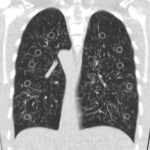
What is the real dose for “Ultra-Low-Dose Chest CT”?
Radiation dose is an increasing concern, especially in the chest, and this area allows very significant dose reduction, preserving diagnostic capability. The comparison with chest X-Rays is more and more valid. Article: Dose estimation of ultra-low-dose chest CT to...
Reply to the Letter to the Editor: “An analysis of 11.3 million screening tests examining the association between recall and cancer detection rates in the English NHS breast cancer screening programme”
Thank you for your interest in our paper. We note that you plan an additional analysis which extends the data which will potentially include the data used here plus, we assume, the possibility of another two years data (2016/17 and 2107/18) as well as interval cancer...Letter to the Editor: “An analysis of 11.3 million screening tests examining the association between recall and cancer detection rates in the English NHS breast cancer screening programme”
Dear Editor, We read with great interest the article entitled “An analysis of 11.3 million screening tests examining the association between recall and cancer detection rates in the English NHS breast cancer screening programme” by Roger Blanks and colleagues [1]. We...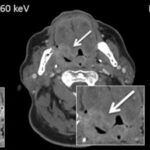
Is Dual-Energy CT beneficial for head and neck imaging?
Dual-energy is constantly gaining ground. This is also the case for head and neck imaging. This study may well encourage us to change our protocols. Article: Comparison of dual- and single-source dual-energy CT in head and neck imaging Authors: Matthias Stefan May,...